
The Challenge of Christian Education: A Reformed Perspective, Part 1
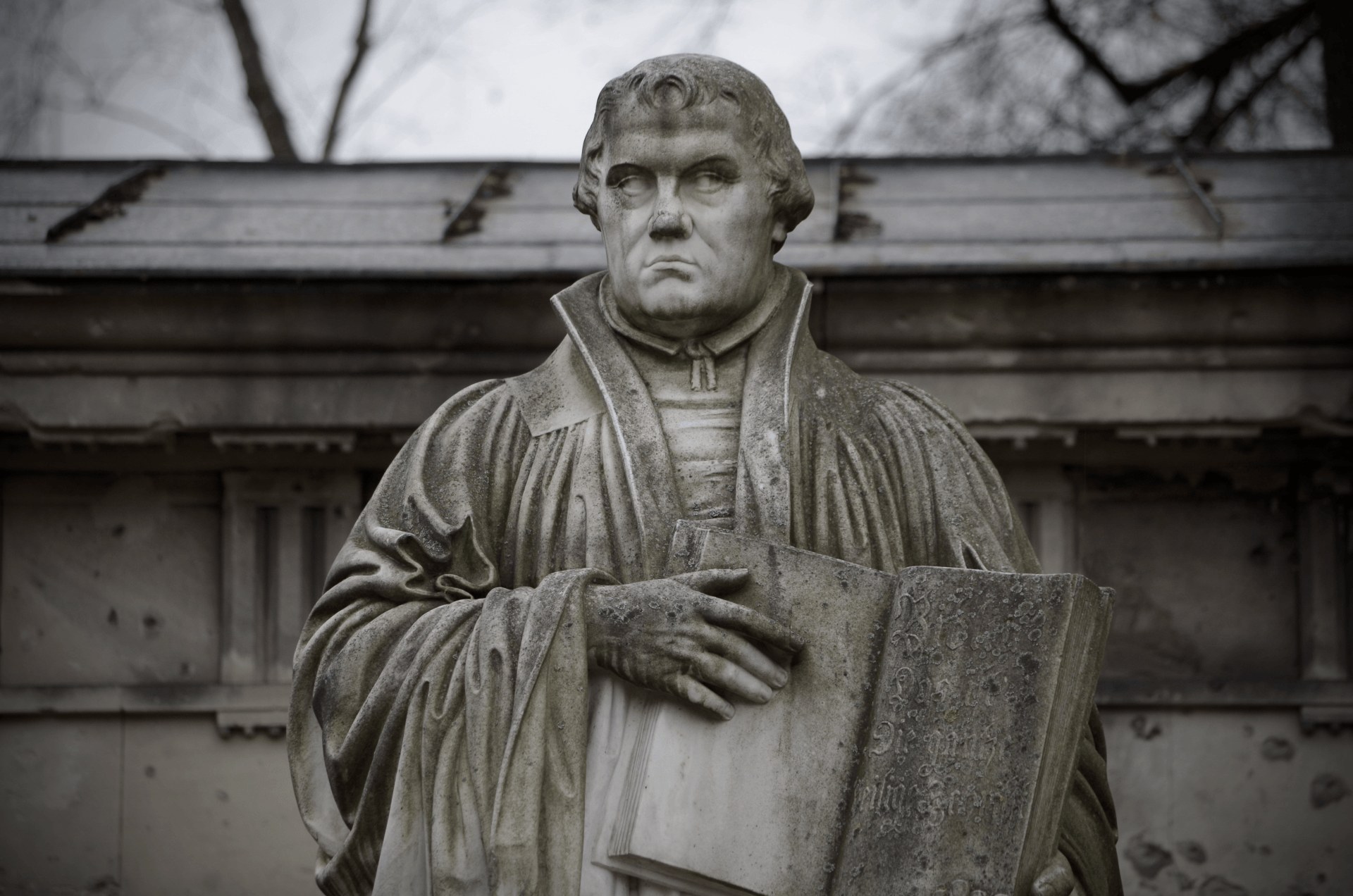
“If I had to give up preaching and my other duties there is no office I would rather have than that of school teacher. For I know that next to the ministry it is the most useful, greatest, and best; and I am not sure which is to be preferred. For it is hard to make old dogs docile and old rogues pious, yet that is what ministry works at, and must work at, in great part, in vain; but young trees, though some may brake in the process, are more easily bent and trained. Therefore let it be considered one of the highest virtues to train the children of others, which duty very few parents attend to themselves.” -Martin Luther
“The prime justification for evangelical education must be a concern for the victory of truth and justice and godliness; its purpose is not simply to compensate for the neglect of the Christian home or failures of the local church, nor to provide personal shelter from the prevailing cultural milieu. Christian education is vital only when it raises up a nucleus of committed evangelical intellectuals who stand in the public arena unequivocally devoted to the truth and right of God.”
Carl F. H. Henry
Introduction
Is Christian Education a luxury or a necessity?
The education of children is a serious matter. Christian Education, inasmuch as it is a fruit of the Church’s “great salvation”, is a vitally serious matter. To all involved, whether students, parents, administrators, teachers, or the surrounding communities schools find themselves in,
Christian Education – rightly conceived and executed-- has a unique stamp pointing to the all-encompassing Lordship of Christ.
Does it accomplish this by preaching the gospel of salvation? By promoting missions or evangelizing the lost? Strictly speaking, no. It does this by self-consciously trying to bring to bear the implications of God’s whole revelation to the student in all he or she studies. This certainly is not to say we exclude the message of the good news of God’s salvation by grace alone through faith alone in Christ’s alone. But it is to say that what Christian Education is aiming at is glorifying God by educating students as fully as possible in things foundational, practical, factual, ethical, and systematically true so that they may flourish in whatever their God-given callings may be.
The Christian educator unabashedly embraces and implements a Biblical philosophy of education as foundational to dealing with the student and his/her areas of study – inside and out. Therein lies one contrast between public education and Christian Education from a Reformed or Calvinistic perspective. The means and ends of the respective educational philosophies carried out in public and private Christian schools are strikingly different. And necessarily so.
And acutely so for the Calvinist!
Calvinists are handicapped by (among other things) the strange visual impairment of recognizing that the truth of the Bible is applicable to every person on this earth, to every subject to be studied, and to every aspect of life! From a Reformed perspective, a fully-orbed Christian philosophy of education makes all the difference in education because it sets forth what must be taught, how it must be taught, why it must be taught; what must be learned, how it must be learned, why it must be learned; and, finally, what must be lived, how it must be lived, and why it must be lived. This all-encompassing Reformed philosophy is derived from Biblical truths and principles and applies to the adults as much (if not more!) as to the children in our care.
Conversions, decisions of faith, and discipleship will take place. Barriers to such things will be removed as much as possible. Cooperation with the local churches should be viewed as indispensable in this regard. But, again, to put it another way, Christian Education at its best is designed to be the outworking of a reflective Christian faith to all educational areas for the glory of God and for the good of the student. After all, the God of the Gospel leaves nothing in His world and our lives untouched.
What, then, is meant by saying Christian Education offers a unique stamp pointing to the all-encompassing Lordship of Christ?
What does it mean for a Christian educator to self-consciously bring to bear the implications of God’s whole revelation in all areas of study? Although God has been marked “absent” in public education for years, private Christian K-12 schools too often carry out a careless and less than expectant attendance count for the God they profess to believe in. Is God really in “attendance” in Christian schools? Does it matter? How could the axiom of Christianity not make all the difference in the world for education? The Bible alone is the Word of the God!
This royal presupposition is our life’s blood, our lung’s air, our only sustenance, and our only solid ground. The remainder of this short essay will attempt to paint a panoramic vista of Christian Education in answering these and other related questions.
The best way that I know how to do this is to paint a Reformed portrait of the challenge of Christian Education. The broad, flowing strokes of a Biblical philosophy of Christian Education will be coupled with the glazing, parallel strokes of Calvinism. Even if the Christian teacher does not presently share this Reformed enthusiasm for and vision of Christian Education, I hope their present working knowledge of the contours of a Christian worldview will be enhanced by my efforts. I hope that Christian educators, at whatever level they teach or in whatever system they teach in, will be encouraged, motivated, inspired, and have their faith strengthened in their own personal reflective process. Freely offered to all Christian teachers in the following is a way to apply the fortunes of Christianity in the classroom as a Reformed heart sees it.
The Challenge Stated
Christian schools face such a grave responsibility to families, to local churches, to their communities, and to the body of Christ that they should be ever mindful of God’s approving or disapproving eye upon the service they render. Does our service reflect this mindfulness? If not, what does that say about us? What does it say about our beliefs?
Can Christian theology contribute anything valuable at all to educational theory & practice? Christian schools, along with public schools, inevitably impact individual lives and the culture at large. Therefore, Christian educators should give serious thought to how they carry out their calling and consider in what ways the fortunes of a Christian worldview can enrich their understanding and appreciation of the teaching profession.
As though this self-reflective process in itself weren’t challenging enough with all the busy-ness of our duties in the school year, there is another fundamental challenge that touches on everything we do as teachers in Christian schools. It is one that should be resolved, but too often isn’t, before the school year starts and certainly before a teacher steps into the classroom. It is both heavenly and earthly. It is at once existential, epistemological, and every day.
The greatest challenge of Christian Education is this: To recognize that there is a unifying principle that not only sustains us through the vicissitudes of our task, but gives rich and lasting meaning in the joys we take part in as well. Reformed theology provides that unifying principle because it invests all of life with a radically scriptural “God significance.” God, undoubtedly, looks upon us approvingly when we seek His glory in all the areas of education by recognizing His significance in those areas.
It should come as no surprise that God has an “opinion” on educational matters.
In ancient biblical times, education was familial in most cultures. God’s people were given the mandate to teach their children His statutes, commandments, and His mighty acts and judgments. They were commanded to fear God and to serve Him in love and gratitude for His mercy and grace upon them. Since God was their Creator, Redeemer, and Deliverer from bondage, the Israelites were expected to wholeheartedly devote themselves to their covenant God. Commitment and allegiance to Him alone were their ultimate responsibility. The Israelites were to shun false gods and do what is right and good in the sight of the LORD.
By contrast, the inhabitants of the Promised Land did not serve the true God. Their education, no doubt, prepared their children and youth for a productive, independent adult life in some trade, skill, or profession. However, their whole lives were lived in the context of the great sin of recalcitrant unbelief in the one true God. Their devotion was to falsehood and their activities, “religious” or otherwise, were inextricably connected to their ultimate commitment to false gods. It is no wonder God regarded not only their religious practices (Prov. 15:8), but their mundane activities (Prov. 21:4) as sin.
Despite appearances, the crown rights of God reach to everyone and everything. In light of this, the Israelites mission is understandable: to drive out the inhabitants of Canaan because there could be no integration between a people of Truth and a people of falsehood. There could be no neutrality among the two people groups in the issues of life, especially with respect to education since education is the medium through which truth or error is transmitted on life’s issues.
We, however, are not in ancient biblical times or lands. Ours is an increasingly crumbling post-Christian, relativistic era. Although our mandate is not the conquest of Canaan, are we not called to be a peculiar people unto our covenant God? If we teachers are not mindful of what God approves of or disapproves of in matters pertinent to education, how can the service we render in our Lord’s name and under the banner of Christian Education be authentic? That would be like an Israelite fashioning an idol and devoting himself to it in thought, word, and deed as a Canaanite might do and considering it no big deal!
What, then, is special about the service we render in the midst of our shattered and decaying culture?
To be continued in Part 2!
Take up and listen to Episodes 1 and 2 of Urban Puritano
Share
Check the Urban Puritano Shop


Urban Puritano Shirt

Suffering Saviour- Black Tee